Canada’s Trade Digitalization Task Force Begins Work on Streamlining Trade Processes
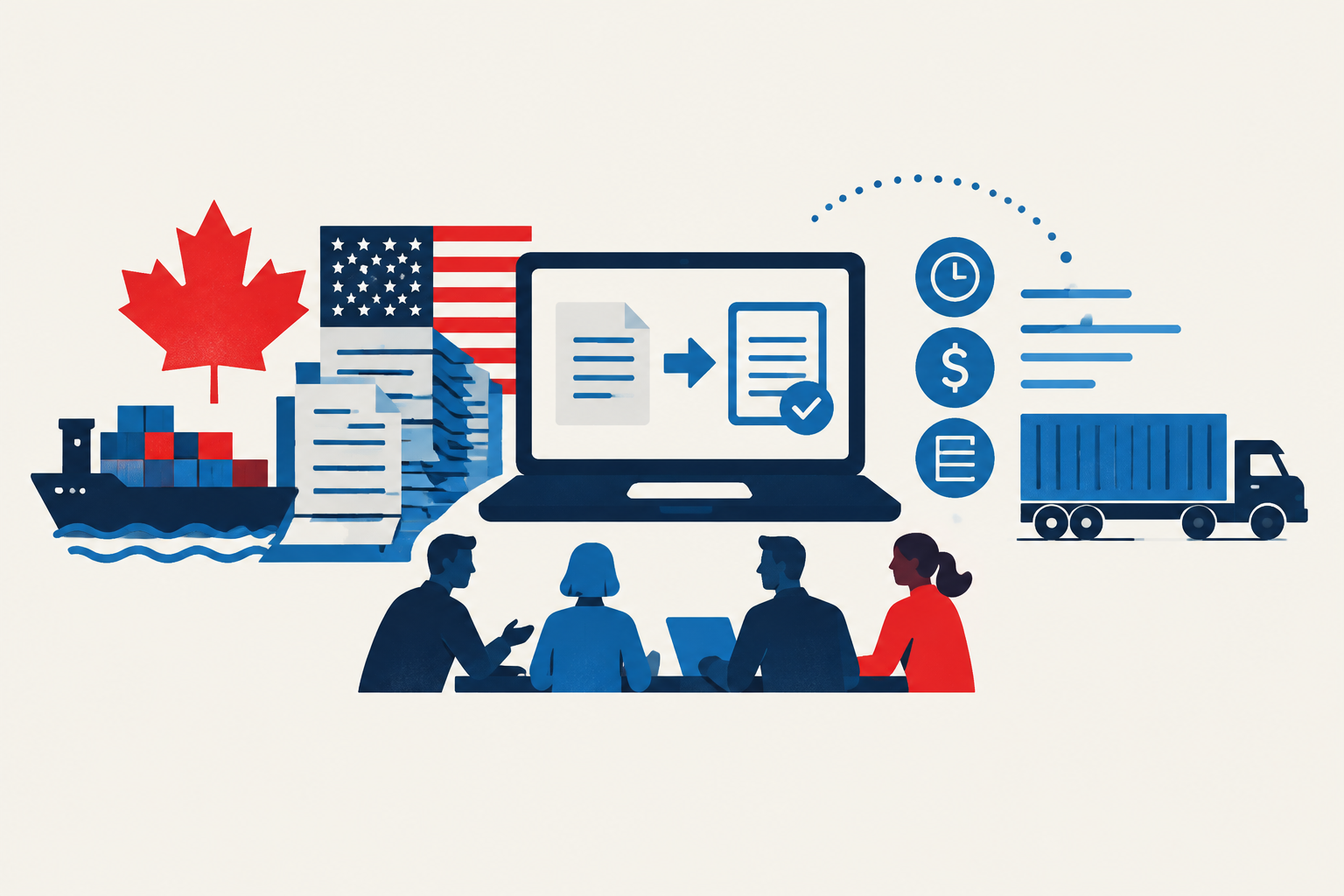
A new federal-industry task force has started work on trade digitalization, aiming to reduce paperwork, delays and administrative costs for businesses.
Transport Canada said the Trade Digitalization Task Force has begun operating, with its first meeting held October 29. Announced October 30 by Transport Minister Steven MacKinnon, the group is intended to bring government and industry together to identify obstacles in trade processing, recommend practical solutions and accelerate the use of digital systems in Canadian trade. [1]
The initiative is focused on how trade information moves among companies, governments and borders rather than on a new tariff, market-access rule or financial support program. Transport Canada said improved digital processes could streamline trade administration, reduce shipping delays and costs, lower administrative burdens, improve the security of trade information, and make shipments more efficient and predictable. These are stated objectives of the task force, rather than measured outcomes to date. [1]
A central proposal is a “Tell Us Once” model under which a business would submit required information once for secure sharing among federal departments and agencies. According to the department, that approach is intended to reduce duplicated submissions and save time and money for firms moving goods domestically and across borders. The task force will also collect industry views on operational challenges and opportunities to simplify procedures, with its advice intended to inform the federal government’s broader trade-digitalization work. [1]
Its membership spans trade and transport participants including the Canada Border Services Agency, Finance Canada, Global Affairs Canada, railways CN and CPKC, ports in Halifax, Montréal and Vancouver, the Canadian Trucking Alliance, customs broker Livingston International, DP World, and business organizations. Other listed participants include Air Canada, the Canadian Federation of Independent Business, Rio Tinto, Sobeys and Merck Canada, giving the group input from logistics, import-export administration and commercial users of the transportation network. [1]
The government has not set out a fixed end date for the task force, saying it will continue while government-industry collaboration is needed to advance trade digitalization across the transportation sector. Officials positioned the work as part of efforts to strengthen supply chains and Canada’s trade connectivity, including the government’s stated objective of expanding non-U.S. exports. The announcement establishes a forum and a proposed direction for process modernization, but does not yet specify implementation deadlines, mandatory data standards, funding, or quantified savings for businesses. [1]
This is a moderately significant implementation step because the task force has formally begun work and brings major government, border, transport and business participants together around reducing duplicated trade information and processing friction. Its potential exposure is broad across goods-moving businesses, but the rating is bounded because the announcement sets out objectives and consultation mechanisms rather than a completed digital system, binding requirements, funding, or demonstrated cost reductions. [1]