Canada Reports Only Limited Progress in U.S. Trade Talks
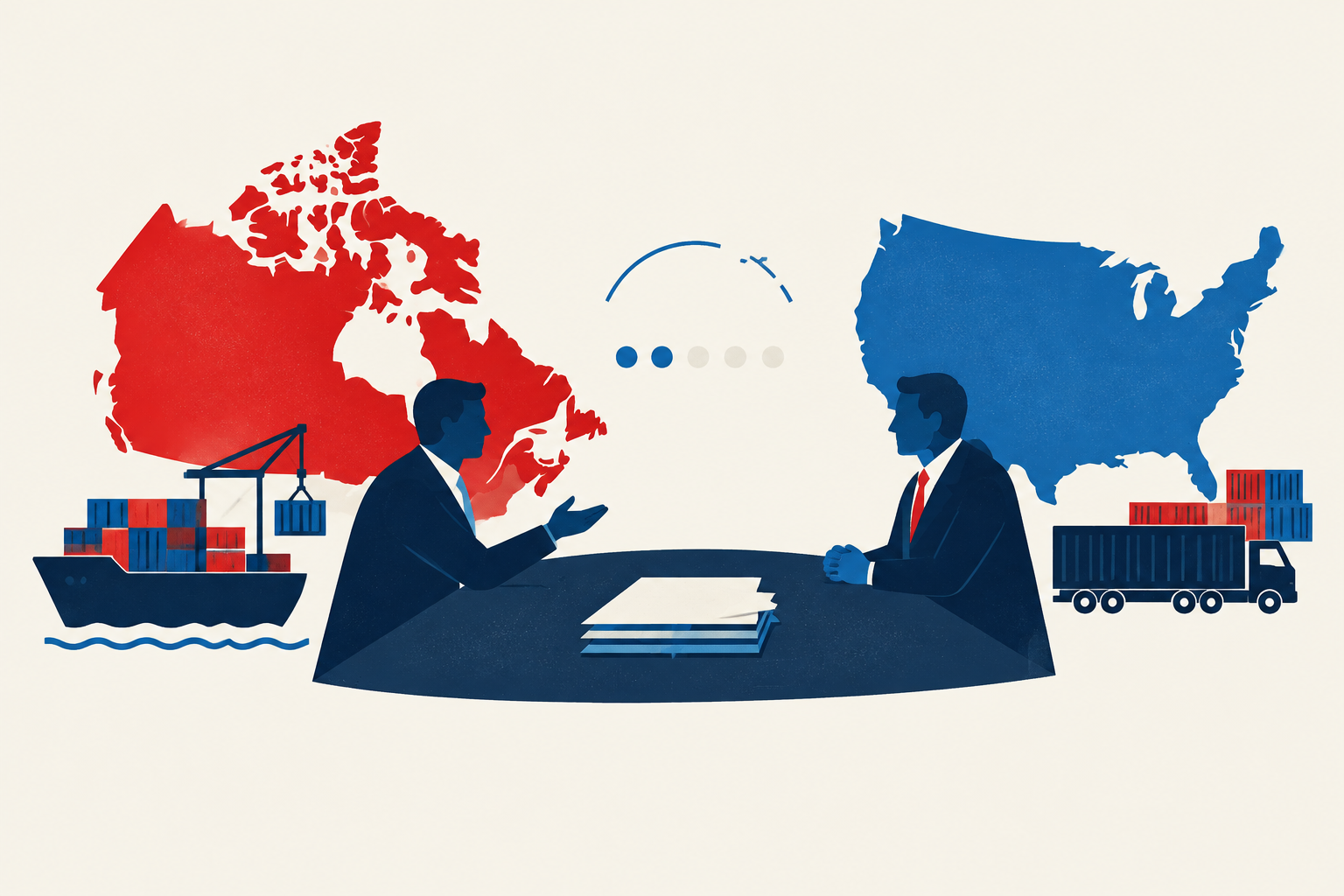
Canadian officials say discussions with Washington have intensified but yielded limited progress, leaving businesses without clarity on tariff relief or a broader agreement.
A Canadian government official with knowledge of the negotiations said on Oct. 27 that recent trade talks with the United States had produced only limited progress, even as discussions continued. The assessment offers a more cautious account of the talks than the prospect of a near-term agreement suggested by U.S. officials. [1][2]
Prime Minister Mark Carney had said the pace of contact had increased somewhat in recent days. At the same time, U.S. President Donald Trump and his officials had indicated that a deal could be possible before the upcoming U.S. midterm elections. The unnamed Canadian official’s characterization indicates that intensified engagement has not yet translated into a material breakthrough in the negotiations as of Oct. 27. [1][2]
The talks are taking place after a deterioration in bilateral trade relations. Canada stepped away from formal negotiations in August, with Carney accusing the United States of making unreasonable late-stage demands. Washington subsequently imposed tariffs on billions of dollars of Canadian goods, and Ottawa answered with retaliatory tariffs on U.S. products. The reports describe the current discussions against that unresolved backdrop. [1][2]
For importers, exporters and producers exposed to the dispute, the immediate implication is continued uncertainty rather than an announced change in tariff treatment. Trump had said on the preceding Friday that some 50 per cent tariffs on Canada would be lifted at month-end, while tariffs would be expanded to dozens of additional products, including Canadian garbage and sewage. The reports do not identify a concluded agreement, implementation terms, or sector-specific concessions from the latest discussions. [1][2]
This is a meaningful but mid-level negotiation signal: Canada reports that bilateral discussions remain active, yet have made only limited progress. Firms exposed to existing U.S. and Canadian tariff actions remain affected by uncertainty over possible relief or additional measures, but no agreement, tariff change, or sector-specific outcome was announced, limiting the immediate impact. [1][2]