Canada, EU launch alliance and open eight-month associate-membership talks
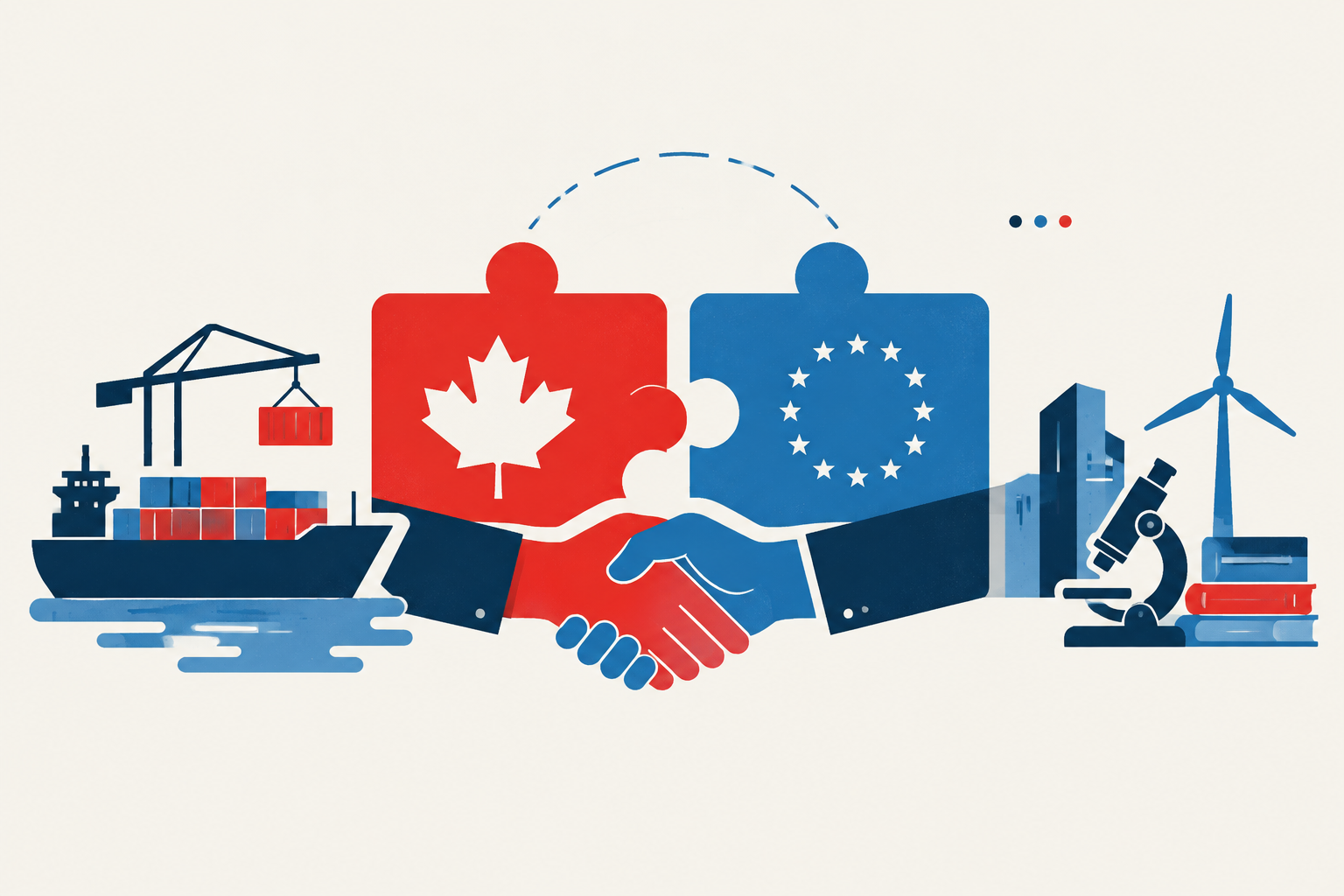
Canada and the EU began negotiations on a closer institutional partnership, signalling new routes for trade, investment and research collaboration.
Canada and the European Union formally launched an “alliance for the future” at the close of their Montreal summit on Oct. 30, pairing the announcement with an eight-month negotiating process on possible Canadian associate membership. Prime Minister Mark Carney, European Commission President Ursula von der Leyen and European Council President António Costa framed the initiative as a deeper partnership, though associate-member language has drawn objections on both sides of the Atlantic. [1]
The seven-page joint statement emphasizes greater industrial collaboration and supply-chain integration, alongside projects already under way. Agreements announced at the summit include a digital trade arrangement and access for Canadian critical-raw-materials projects to financing from the European Investment Bank. Canadian officials said the package is intended to reduce frictions for firms selling into Europe, including through payments and customs-related improvements for online exporters. [1]
For Canadian businesses, the immediate change is the opening of a structured negotiation rather than a new market-access regime. The summit agreements point to potential commercial opportunities in digital services, resource-project financing and cross-border research, but the source does not establish that associate membership, expanded labour mobility, or further regulatory arrangements have been concluded. Carney is scheduled to meet the European Commission’s college of commissioners next spring, while Costa plans to host him at a European Council meeting in June, when leaders aim to provide more detail. [1]
The discussions also cover areas that could affect trade conditions for Canadian exporters. Leaders raised the prospective application of the EU’s anti-deforestation requirements and Carbon Border Adjustment Mechanism to Canadian goods. A Canadian official said talks on recognition of federal and provincial emissions-pricing systems were advanced, while acknowledging that further work remains. The joint agenda additionally includes artificial-intelligence research access, Arctic and border-security dialogue, and potential cooperation on youth mobility. [1]
Canada is seeking fuller participation in EU programs beyond the alliance talks. Officials said Ottawa aims to join Erasmus+ around the middle of 2027 and hopes to become a full member of Horizon Europe by 2028; Canada currently participates in Horizon as a second-tier member. The summit’s broader direction therefore creates a framework for future integration, but key commercial details, program terms and any associate-member status remain subject to negotiation and political approval. [1]
This is a significant negotiating milestone because Canada and the EU moved from exploratory cooperation to a formally launched alliance with an eight-month process toward possible associate membership. Exporters, digital firms, critical-minerals projects and research organizations could benefit if the planned arrangements advance, but the rating is not higher because the source describes negotiations and prospective cooperation rather than implemented tariff relief or binding new market-access rules. [1]